Free times are on the way; If you and I agree; To share the world and all it holds. A sane society.


Friday, 15 January 2010

The London Hanged by Peter Linebaugh. (Verso, Second Edition, 2006.)


This is a detailed history of the rise of capitalism in eighteenth-century London. During this period you really could be hanged for stealing a loaf of bread. But public hangings were not simply a punishment for a crime committed; they were a form of state terror used by the ruling class to force the poor of London to accept the criminalization of their customary rights and accept new forms of private property under the wages system.

In the resulting class war thousands of London poor met their fate on the gallows at Tyburn. Jack Sheppard and Dick Turpin were famous at this time as heroes of the London poor, as men who would “rob from the rich to give to the poor”. Even today the exploits of the highway robber Dick Turpin are well-known in Britain. But Sheppard, thief and gaol-breaker, became notorious around the world. Over a century later the Australian press were making comparisons between Ned Kelly and Sheppard. In America, Frank and Jesse James wrote letters to newspapers signed “Jack Sheppard”. Sheppard, Turpin and many others were eventually caught and hanged. However, their legacy remained a problem for the ruling class. For as Linebaugh writes, their exploits became “an essential part of the oppositional culture of working class London, a serious obstacle to the formation of a tractable, obedient labour force. Therefore, it was not enough to hang them – the values they espoused or represented had to be challenged”

But the working class fought back, culminating in the little-known Gordon Riots of June 1780. In this insurrection, Parliament and the Bank of England were attacked, the houses of judges and major employers destroyed. Newgate prison was attacked, its prisoners released and the building completely destroyed (this was only nine years before the storming of the Bastille in revolutionary France). Between 400 and 500 people were killed. Yet by the end of the eighteenth-century the social relations of wage labour and capital were predominant. To avoid confrontation, public hangings ceased but they continued within the relative safety (for the hangman!) of prison walls. There is however one remaining vestige of this violent period: the Punch and Judy show. Brought to London's Drury Lane in 1790 by the Italian puppeteer Giovanni Piccinni, the show expresses “the emotions of a class riven with unresolvable contradictions”. In the murderous rage of Punch we see the frustrations of a class at war. Punch is arrested and sent to the gallows but refuses to comply. The hangman “puts his own head in the noose to teach Punch how to do it, and Punch hangs the hangman”. A magnificent and important book.

LEW


Thanks to Lew for reminding me about this review of The London Hanged in the Socialist Standard (May 2007 issue).

Thursday, 14 January 2010

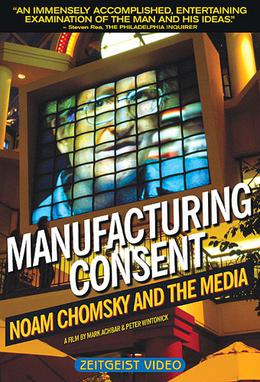
"Manufacturing Consent - Noam Chomsky and the Media".

As part of our radical film forum screenings we will be presenting:


"Manufacturing Consent - Noam Chomsky and the Media"

at:

Socialist Party of Great Britain Head Office
52 Clapham High Street
London
SW4 7UN

Part one: Sunday, 17 January.
That's this Sunday

Part two: Sunday, 31 January.
Both start at 6.00pm

Free entry. Free discussion. Free speech.

"All For One and One For All!" Some Principles of the Commons by Peter Linebaugh


Don't give up on this one. Keep reading. It's worth it. Trust me.

Human solidarity as expressed in the slogan “all for one and one for all” is the foundation of commoning. In capitalist society this principle is permitted in childhood games or in military combat. Otherwise, when it is not honored in hypocrisy, it appears in the struggle contra capitalism or, as Rebecca Solnit shows, in the disasters of fire, flood, or earthquake.

The activity of commoning is conducted through labor with other resources; it does not make a division between “labor” and “natural resources.” On the contrary, it is labor which creates something as a resource, and it is by resources that the collectivity of labor comes to pass. As an action it is thus best understood as a verb rather than as a “common pool resource.” Both Lovelock’s ‘Gaia Hypothesis’ and the environmentalism of Rachel Carson were attempts to restore this perspective.

Commoning is primary to human life. Scholars used to write of ‘primitive communism’. ‘The primary commons’ renders the experience more clearly. Scarcely a society has existed on the face of the earth which has not had at its heart the commons; the commodity with its individualism and privatization was strictly confined to the margins of the community where severe regulations punished violators.

Commoning begins in the family. The kitchen where production and reproduction meet, and the energies of the day between genders and between generations are negotiated. The momentous decisions in the sharing of tasks, in the distribution of product, in the creation of desire, and in sustaining health are first made here.

Commoning is historic. The ‘village commons’ of English heritage or the ‘French commune’ of the revolutionary past are remnants from this history, reminding us that despite stages of destruction parts have survived, though often in distorted fashion as in welfare systems, or even as their opposite as in the realtor’s gated community or the retailer’s mall.

Commoning has always had a spiritual significance expressed as sharing a meal or a drink, in archaic uses derived from monastic practices, in recognition of the sacred habitus. Theophany, or the appearance of the divine principle, is apprehended in the physical world and its creatures. In north America (“turtle island”) this principle is maintained by indigenous people.

Commons is antithetical to capital. Commmoners are quarrelsome (no doubt), yet the commons is without class struggle. To be sure, capital can arise from the commons, as part is sequestrated off and used against the rest. This begins with inegalitarian relations, among the Have Lesses and the Have Mores. The means of production become the way of destruction, and expropriation leads to exploitation, the Haves and Have Nots. Capital derides commoning by ideological uses of philosophy, logic, and economics which say the commons is impossible or tragic. The figures of speech in these arguments depend on fantasies of destruction – the desert, the life-boat, the prison. They always assume as axiomatic that concept expressive of capital’s bid for eternity, the a-historical ‘Human Nature.’

Communal values must be taught, and renewed, continuously. The ancient court leet resolved quarrels of over-use; the panchayat in India did – and sometimes still does -- the same, like the way a factory grievance committee is supposed to be; the jury of peers is a vestigial remnant which determines what a crime is as well as who’s a criminal. The “neighbor” must be put back into the “hood,” as they say in Detroit, like the people’s assemblies in Oaxaca.

Commoning has always been local. It depends on custom, memory, and oral transmission for the maintenance of its norms rather than law, police, and media. Closely associated with this is the independence of the commons from government or state authority. The centralized state was built upon it. It is, as it were, ‘the pre-existing condition.’ Therefore, commoning is not the same as the communism of the USSR.

The commons is invisible until it is lost. Water, air, earth, fire – these were the historic substances of subsistence. They were the archaic physics upon which metaphysics was built. Even after land began to be commodified during English Middle Ages it was written,

But to buy water or wind or wit or fire the fourth, These four the Father of Heaven formed for this earth in common;
These are Truth’s treasures to help true folk

We distinguish ‘the common’ from ‘the public’. We understand the public in contrast to the private, and we understand common solidarity in contrast to individual egotism. The commons has always been an element in human production even when capitalism acquired the hoard or laid down the law. The boss might ‘mean business’ but nothing gets done without respect. Otherwise, sabotage and the shoddy result.

Commoning is exclusive inasmuch as it requires participation. It must be entered into. Whether on the high pastures for the flock or the light of the computer screen for the data, the wealth of knowledge, or the real good of hand and brain, requires the posture and attitude of working alongside, shoulder to shoulder. This is why we speak neither of rights nor obligations separately.

Human thought cannot flourish without the intercourse of the commons. Hence, the first amendment linking the rights of speech, assembly, and petition. A moment’s thought reveals the interaction among these three activities which proceed from lonely muttering to poetic eloquence to world changing, or

Bing! Bing! the light bulb of an idea
Buzz! Buzz! talking it over with neighbors or co-workers
Pow! Pow! telling truth to power.

Peter Linebaugh teaches history at the University of Toledo. The London Hanged and (with Marcus Rediker) The Many-Headed Hydra: the Hidden History of the Revolutionary Atlantic. His essay on the history of May Day is included in Serpents in the Garden. His latest book is the Magna Carta Manifesto. He can be reached at: plineba@yahoo.com

Orinally published here

Thanks to Jools for posting this on worldincommon forum

Monday, 11 January 2010

Are Americans a Broken People? Why We've Stopped Fighting Back Against the Forces of Oppression


A psychologist asks: Have consumerism, suburbanization and a malevolent corporate-government partnership so beaten us down that we no longer have the will to save ourselves?

Can people become so broken that truths of how they are being screwed do not "set them free" but instead further demoralize them? Has such a demoralization happened in the United States?

Do some totalitarians actually want us to hear how we have been screwed because they know that humiliating passivity in the face of obvious oppression will demoralize us even further?

What forces have created a demoralized, passive, dis-couraged U.S. population?

Can anything be done to turn this around?

Can people become so broken that truths of how they are being screwed do not "set them free" but instead further demoralize them?

Yes. It is called the "abuse syndrome." How do abusive pimps, spouses, bosses, corporations, and governments stay in control? They shove lies, emotional and physical abuses, and injustices in their victims' faces, and when victims are afraid to exit from these relationships, they get weaker. So the abuser then makes their victims eat even more lies, abuses, and injustices, resulting in victims even weaker as they remain in these relationships.

Does knowing the truth of their abuse set people free when they are deep in these abuse syndromes?

No. For victims of the abuse syndrome, the truth of their passive submission to humiliating oppression is more than embarrassing; it can feel shameful -- and there is nothing more painful than shame. When one already feels beaten down and demoralized, the likely response to the pain of shame is not constructive action, but more attempts to shut down or divert oneself from this pain. It is not likely that the truth of one's humiliating oppression is going to energize one to constructive actions.

Has such a demoralization happened in the U.S.?

In the United States, 47 million people are without health insurance, and many millions more are underinsured or a job layoff away from losing their coverage. But despite the current sellout by their elected officials to the insurance industry, there is no outpouring of millions of U.S. citizens on the streets of Washington, D.C., protesting this betrayal.

Polls show that the majority of Americans oppose U.S. wars in Afghanistan and Iraq as well as the taxpayer bailout of the financial industry, yet only a handful of U.S. citizens have protested these circumstances.

Remember the 2000 U.S. presidential election? That's the one in which Al Gore received 500,000 more votes than George W. Bush. That's also the one that the Florida Supreme Court's order for a recount of the disputed Florida vote was overruled by the U.S. Supreme Court in a politicized 5-4 decision, of which dissenting Justice John Paul Stevens remarked: "Although we may never know with complete certainty the identity of the winner of this year's presidential election, the identity of the loser is perfectly clear. It is the nation's confidence in the judge as an impartial guardian of the rule of law." Yet, even this provoked few demonstrators.

When people become broken, they cannot act on truths of injustice. Furthermore, when people have become broken, more truths about how they have been victimized can lead to shame about how they have allowed it. And shame, like fear, is one more way we become even more psychologically broken.

U.S. citizens do not actively protest obvious injustices for the same reasons that people cannot leave their abusive spouses: They feel helpless to effect change. The more we don't act, the weaker we get. And ultimately to deal with the painful humiliation over inaction in the face of an oppressor, we move to shut-down mode and use escape strategies such as depression, substance abuse, and other diversions, which further keep us from acting. This is the vicious cycle of all abuse syndromes.

Schools and Universities: Do most schools teach young people to be action-oriented -- or to be passive? Do most schools teach young people that they can affect their surroundings -- or not to bother? Do schools provide examples of democratic institutions -- or examples of authoritarian ones?

A long list of school critics from Henry David Thoreau to John Dewey, John Holt, Paul Goodman, Jonathan Kozol, Alfie Kohn, Ivan Illich, and John Taylor Gatto have pointed out that a school is nothing less than a miniature society: what young people experience in schools is the chief means of creating our future society. Schools are routinely places where kids -- through fear -- learn to comply to authorities for whom they often have no respect, and to regurgitate material they often find meaningless. These are great ways of breaking someone.

Today, U.S. colleges and universities have increasingly become places where young people are merely acquiring degree credentials -- badges of compliance for corporate employers -- in exchange for learning to accept bureaucratic domination and enslaving debt.

Mental Health Institutions: Aldous Huxley predicted today's pharmaceutical societyl "[I]t seems to me perfectly in the cards," he said, "that there will be within the next generation or so a pharmacological method of making people love their servitude."

Today, increasing numbers of people in the U.S. who do not comply with authority are being diagnosed with mental illnesses and medicated with psychiatric drugs that make them less pained about their boredom, resentments, and other negative emotions, thus rendering them more compliant and manageable.

Oppositional defiant disorder (ODD) is an increasingly popular diagnosis for children and teenagers. The official symptoms of ODD include, "often actively defies or refuses to comply with adult requests or rules," and "often argues with adults." An even more common reaction to oppressive authorities than the overt defiance of ODD is some type of passive defiance -- for example, attention deficit hyperactivity disorder (ADHD). Studies show that virtually all children diagnosed with ADHD will pay attention to activities that they actually enjoy or that they have chosen. In other words, when ADHD-labeled kids are having a good time and in control, the "disease" goes away.

When human beings feel too terrified and broken to actively protest, they may stage a "passive-aggressive revolution" by simply getting depressed, staying drunk, and not doing anything -- this is one reason why the Soviet empire crumbled. However, the diseasing/medicalizing of rebellion and drug "treatments" have weakened the power of even this passive-aggressive revolution.

Television: In his book Four Arguments for the Elimination of Television (1978), Jerry Mander (after reviewing totalitarian critics such as George Orwell, Aldous Huxley, Jacques Ellul, and Ivan Illich) compiled a list of the "Eight Ideal Conditions for the Flowering of Autocracy."

Mander claimed that television helps create all eight conditions for breaking a population. Television, he explained, (1) occupies people so that they don't know themselves -- and what a human being is; (2) separates people from one another; (3) creates sensory deprivation; (4) occupies the mind and fills the brain with prearranged experience and thought; (5) encourages drug use to dampen dissatisfaction (while TV itself produces a drug-like effect, this was compounded in 1997 the U.S. Food and Drug Administration relaxing the rules of prescription-drug advertising); (6) centralizes knowledge and information; (7) eliminates or "museumize" other cultures to eliminate comparisons; and (8) redefines happiness and the meaning of life.

Commericalism of Damn Near Everything: While spirituality, music, and cinema can be revolutionary forces, the gross commercialization of all of these has deadened their capacity to energize rebellion. So now, damn near everything – not just organized religion -- has become "opiates of the masses."

The primary societal role of U.S. citizens is no longer that of "citizen" but that of "consumer." While citizens know that buying and selling within community strengthens that community and that this strengthens democracy, consumers care only about the best deal. While citizens understand that dependency on an impersonal creditor is a kind of slavery, consumers get excited with credit cards that offer a temporarily low APR.

Consumerism breaks people by devaluing human connectedness, socializing self-absorption, obliterating self-reliance, alienating people from normal human emotional reactions, and by selling the idea that purchased products -- not themselves and their community -- are their salvation.

By Bruce E. Levine, AlterNet.

The whole piece is well worth reading here

Big credit to Alan Johnstone for finding the article.

Socialist tv is tuned in again and on a roll!


And cracking, all-round family entertainment it is too!

For your delight and delectation we offer you:

Simple Mind Control
Have you ever wondered why otherwise intelligent people can't see what's right in front of their own faces?
Fascists and other liars know that if they can just make enough noise, they can start a stampede of public opinion which will become very hard for the average person to question.

Orwell Rolls in his Grave
"Could a media system, controlled by a few global corporations with the ability to overwhelm all competing voices, be able to turn lies into truth?..." This chilling documentary film examines the relationship between the media, corporate America, and government. In a country where the "top 1% control 90% of the wealth", the film argues that the media system is nothing but a "subsidiary of corporate America."

War is a Racket: The real speech re-created by an actor
If you know your history, you know that in 1934 there was an attempted coup in the United States that was thwarted largely due to the efforts of U.S. Marine Corps Major General Smedley Butler (ret.). Look it up.
Among other things, Butler was only one of 19 people ever awarded the Medal of Honor twice and the only person to be awarded a Marine Corps Brevet Medal and a Medal of Honor for two different actions. After it dawned on him how his heroism and the heroism of the troops under his command had been misused, he wrote a book called "War is a Racket" which is certainly not to be found on the curriculum in US schools.

And that's not all folks!

Wednesday, 6 January 2010

Public funding for ‘anti-union’ rail franchises


From Alsef's January 2010 'Locomotive Journal'.

"There is now formal evidence that rail franchises, drawn up by tories and backed by labour, are actively anti-worker.

Franchise rail firms don’t need to bother about having good industrial relations. If they cause a strike by bad treatment of employees or insulting pay offers, they’re not too worried – because the taxpayer will compensate them.

This is the result of a clause that reads ‘the secretary of state, in his sole discretion, may decide to reimburse or ameliorate net losses of the franchise operator arising from industrial action (howsoever caused and of whatever nature)'.

This is really remarkable. It means companies can treat staff as badly as they choose – and get paid for doing it!

This only came into the public eye after Dave Calfe from the Aslef executive committee had a two-year battle to prise information about this clause from the department for transport, using the freedom of Information Act.

As a result of his persistence Blaydon MP Dave Anderson asked a direct Parliamentary Question – had the department for transport paid out money under this clause? Yes, came the eventual and reluctant reply.

He asked who it was paid to, and how much they got – but this information was not given to him because it was ‘commercially confidential’.

Read that again. On the grounds of commercially confidentiality, the labour government will not tell a member of Parliament how much taxpayers’ money had gone to subsidise an employer who had been inconvenienced by legal industrial action taken by a union affiliated to labour!

This really is a scandal. It’s the equivalent of the tories agreeing to fund our members’ wages during an industrial dispute. And worse, itactively protects franchises that have bad industrial relations practices.

Franchises make the government position utterly illogical. If we ask them to intervene on an issue, they says it’s nothing to do with them. They are independent companies and the department for transport has no control over them. This is nonsense. two companies – First Capital Connect and London Midland – were summoned to the department last month and told to submit action plans to improve
their performance.

This is clear intervention by the government, which leads to two conclusions. First it means it can intervene on issues we want raised with companies, like free staff travel. And second, if it does have to intervene, the logic is for the department to oversee the whole railway in the public sector.

All they need to do is not renew franchises when they run out. I know Aslef will be accused of bad manners again – but it is a fact that this is labour Party policy."


So Aslef are surprised that a Labour government is following 'anti-union' policies. You'd have thought they would have become accustomed to it by now.

They draw two conclusions. I have two of my own:

First, Aslef insists on continuing to be affiliated to the Labour Party and to waste union members' dues on funding this anti-working class organisation. The union leaders actively encourage local branches to affiliate to their local Labour Party. The Aslef leadership are, therefore, partly responsible for the Labour government's 'anti-union' policies.

Second, Aslef assumes that governments are entirely free to follow whatever policies they choose. However, when you seek to hold political power you are forced to play by capitalism's rules. It is the capitalist dog that wags the government's tail, not the other way around.

Saturday, 2 January 2010

Poles Apart? Capitalism or Socialism as the Planet Heats Up.


Can a solution to climate change be found within the constraints of the market system?
Or, is a society of common ownership and democratically organised production the way forward to true sustainability?
A filmed talk featuring Glenn Morris of 'Arctic Voice' and Brian Gardner of The Socialist Party of Great Britain. Recorded at Conway Hall, London, April 5th 2008.

You can view it here.